
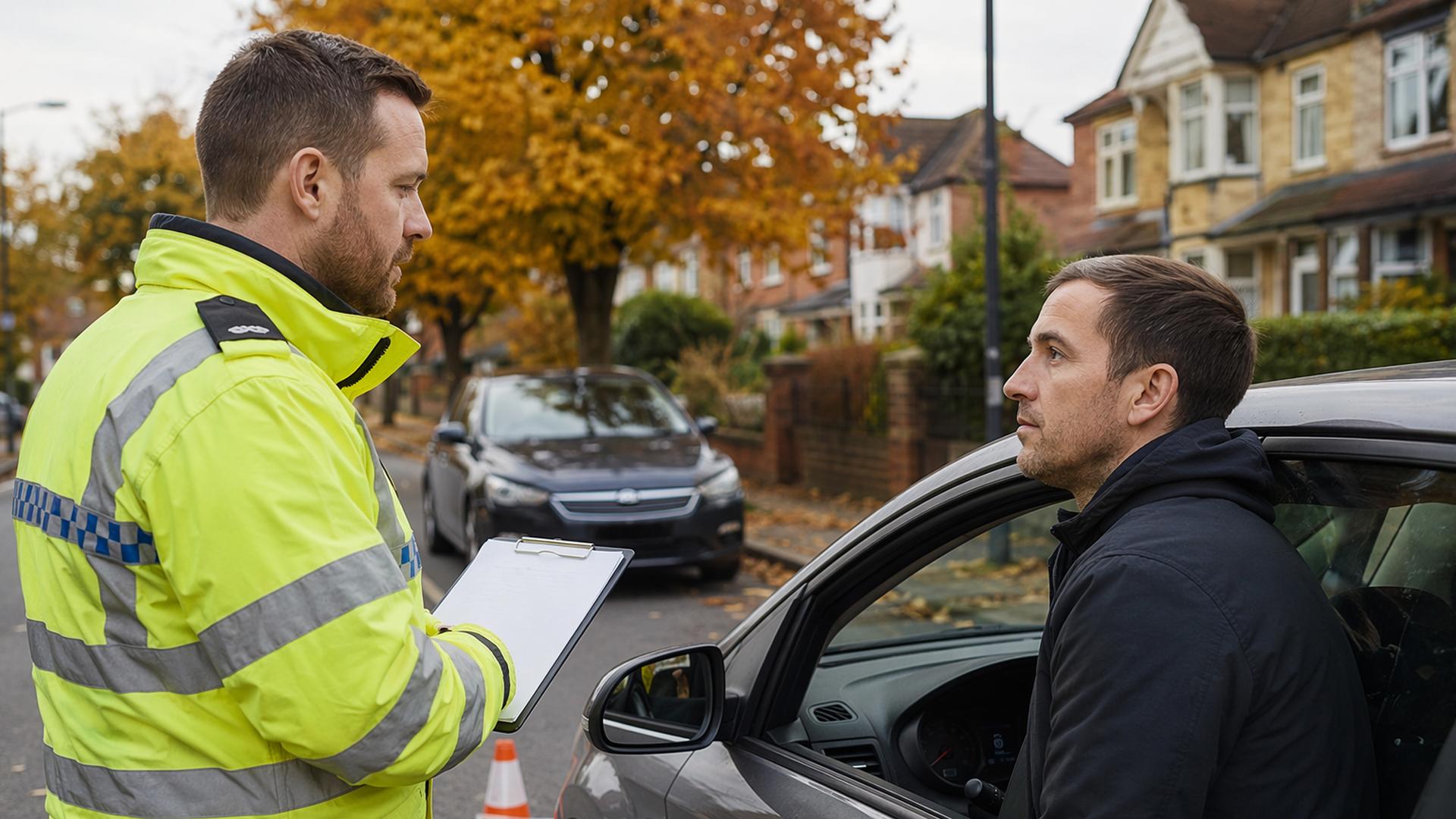
7 Things That Happen After a Failed Drug Test at the Roadside in the UK
Published by Drug Driving Solicitors, specialist defence lawyers for drug driving charges across England and Wales.
Failing a roadside drug test is a disorienting experience. In a matter of minutes, a routine police stop can set in motion a legal process that many drivers know very little about, and that uncertainty can make an already stressful situation feel overwhelming. Understanding what actually happens, step by step, gives you the clearest possible foundation for making sound decisions about your situation.
This article walks through the seven key stages that follow a positive roadside drug test result in England and Wales. Whether you are trying to understand what lies ahead for yourself or someone close to you, the information below sets out each stage in plain terms, with enough technical detail to be genuinely useful.
1. The Roadside Device Produces a Positive Reading
The process formally begins the moment a type-approved roadside drug screening device returns a positive result. In England and Wales, police officers use devices such as the Draeger DrugTest 5000, which is capable of detecting the presence of cannabis and cocaine at the roadside. These devices analyse a saliva sample and, when a positive reading is produced, give the officer reasonable grounds to proceed further.
It is worth understanding what the roadside result does and does not mean at this stage. The device is a screening tool, not a definitive evidential test. A positive reading indicates the possible presence of a controlled drug above a certain threshold in your saliva, but it does not, by itself, prove that you were driving with a drug above the legal limit in your blood. That determination can only be made through a laboratory analysis of a blood sample taken later in the process.
The type-approval of the device and the drug it is approved to detect are both legally significant. Not every device is approved for every substance, and if the officer uses a device that is not type-approved for the drug allegedly detected, that can have serious implications for the strength of the prosecution's case. This is one of the first points a specialist solicitor will examine.
If the reading is negative but an officer still suspects impairment, there is a separate power under Section 4 of the Road Traffic Act 1988 to arrest for driving while impaired through drugs. The two offences are distinct, and the roadside screening result is the gateway to the Section 5A offence that most cases involve.
2. You Are Arrested and Taken to a Custody Suite
Once the roadside device produces a positive result, the officer has the power to arrest you. The arrest will typically be made under Section 5A of the Road Traffic Act 1988, which covers driving or attempting to drive with a specified controlled drug above its limit in the blood. You will be informed of the reason for your arrest, cautioned in the standard terms, and transported to a police custody suite.
Arrival at the custody suite marks a formal transition in the process. The custody sergeant will book you in, record your personal details, and read you your rights. You have the right to have someone informed of your arrest, the right to consult a solicitor free of charge, and the right to consult the Codes of Practice that govern how the police must treat you. You are strongly advised to exercise the right to speak with a solicitor before any further steps are taken.
The conditions in a custody suite are deliberately functional rather than comfortable, and the process can take several hours from start to finish. It is normal to feel anxious and to want the process to be over quickly. However, decisions made hurriedly in custody, particularly decisions about whether to answer questions or provide samples, can have lasting consequences. Taking the time to receive proper legal advice at this stage is always worthwhile.
Your property will be recorded and stored, and you may be placed in a cell while the custody sergeant and investigating officer prepare for the next stages of the process. The atmosphere can feel intimidating, but the process is governed by strict rules under the Police and Criminal Evidence Act 1984 and the accompanying Codes of Practice, all of which exist to protect your rights.
3. The Officer Administers a Statutory Warning
Before requiring you to provide a blood sample, the officer must administer what is known as a statutory warning. This is a specific, prescribed form of words that informs you of the requirement to provide a specimen and of the consequences of refusing to do so without a reasonable excuse. The wording of this warning is set out in statute and is not a formality that the officer can improvise or abbreviate.
The statutory warning is one of the most legally significant steps in the entire process. If it is not administered correctly, in the right form and at the right point, the evidence obtained from the subsequent blood sample may be rendered inadmissible. Courts have quashed drug driving convictions on precisely this basis, and it is a point that experienced defence solicitors examine carefully when reviewing the prosecution's evidence.
The requirement to administer the warning reflects an important principle in English law: a driver must be properly informed of what is being asked of them and what the consequences of non-compliance are before they can be required to submit to an evidential procedure. It is not simply a procedural nicety but a safeguard with real legal teeth.
If you believe the warning was not administered, was administered in the wrong terms, or was given at an inappropriate stage of the process, you should note this and raise it with your solicitor as soon as possible. Details like this are easily overlooked in the stress of the moment, which is one of the reasons contemporaneous notes and prompt legal advice are so valuable.
4. A Healthcare Professional Takes a Blood Sample
Following the statutory warning, a blood sample will be taken by a healthcare professional, typically a police surgeon or forensic medical examiner, at the custody suite. The officer cannot take the sample themselves; the requirement for a qualified healthcare professional is a statutory safeguard built into the process under Section 7A of the Road Traffic Act 1988.
The blood draw is a routine procedure and is carried out with standard clinical equipment. Two samples are taken from the same draw: one is retained by the police for laboratory analysis, and one is offered to you. The offer of your own portion of the sample is not optional on the officer's part; it is a legal requirement. You are entitled to take your part of the sample away and have it independently analysed if you wish. Refusing to accept your portion does not prevent the police from using theirs, but having your own sample independently tested can provide valuable evidence in your defence.
The chain of custody from this point forward is carefully managed because any break in that chain, any point at which the integrity of the sample could be called into question, represents a potential challenge to the admissibility of the laboratory results. Packaging, labelling, storage conditions and the documented handling of the sample between the custody suite and the laboratory are all relevant.
If there is a medical reason why a blood sample cannot be taken, for example a needle phobia supported by appropriate medical evidence, or a clinical condition that prevents venepuncture, you should raise this immediately with the healthcare professional and ensure it is recorded. The definition of a reasonable excuse for not providing a sample is narrow and must be properly evidenced, but genuine medical grounds can be relevant to the legal outcome.
5. Your Case Is Heard at the Magistrates' Court
The vast majority of drug driving cases in England and Wales are heard at the Magistrates' Court, which has full sentencing powers for this offence. If you are charged, you will receive a summons or be bailed to appear at your local magistrates' court on a specified date. The court will deal with your case either by a guilty plea, a not guilty plea followed by a trial, or, in some circumstances, a written guilty plea submitted by post.
The sentencing range for a drug driving conviction under Section 5A of the Road Traffic Act 1988 includes a mandatory minimum disqualification of 12 months, an unlimited fine, up to six months' imprisonment, and a requirement to complete an extended driving test before resuming driving. For a second drug driving conviction within 10 years, the minimum ban increases to three years. The court also has the option of offering a drink and drug driving rehabilitation course, which can reduce the period of disqualification.
If you plead not guilty, the case will be listed for trial, usually on a separate date. The prosecution will be required to serve its evidence, which will include the laboratory report, the arresting officer's notes, the custody record, and all documentation relating to the blood sample. A specialist solicitor will review each piece of evidence and identify any points that undermine the prosecution's case, whether relating to the roadside screening, the statutory warning, the chain of custody, or the laboratory analysis itself.
Appearing in a magistrates' court for the first time is understandably daunting, but the process is structured and the court is required to conduct proceedings fairly. Having a specialist solicitor or barrister represent you not only increases the quality of the legal arguments made on your behalf but also ensures that you understand what is happening at each stage and that your account is presented clearly and compellingly.
6. The Blood Sample Is Sent for Laboratory Analysis
Once the blood sample has been packaged and its chain of custody documented, it is sent to a laboratory nominated by the police force. The laboratory will conduct a detailed forensic analysis to determine the concentration of any controlled drugs present in the blood. The results are expressed in micrograms per litre, and they are measured against the specified limits set out in the Drug Driving (Specified Limits) (England and Wales) Regulations 2014.
The laboratory analysis stage is typically the longest part of the process. Depending on the workload of the nominated laboratory and the number of substances to be tested for, the analysis can take anywhere from several weeks to several months. During this time, you may hear nothing from the police or prosecution, which can be unsettling. It does not mean that the matter has been dropped; it simply reflects the time required for the forensic science work to be completed to the standard required.
The laboratory report that emerges from this process is the central piece of evidence in the prosecution's case. It will identify the drug or drugs detected, state the concentration found, and confirm that the analysis was conducted in accordance with the relevant scientific protocols. However, laboratory reports are not immune from challenge. Errors in the analytical process, calibration issues with equipment, and problems with how the sample was stored or handled can all affect the reliability of the results.
If you have retained your portion of the blood sample, this is the point at which instructing an independent forensic scientist to carry out a parallel analysis becomes particularly relevant. Independent analysis can either corroborate the police laboratory's findings or identify discrepancies that are worth exploring further. A specialist solicitor will advise you on whether independent testing is appropriate in your specific circumstances and help you instruct a suitably qualified expert.
7. You Are Charged or Told No Further Action Will Be Taken
Once the laboratory report has been received and reviewed, the investigating officer and the Crown Prosecution Service will make a charging decision. There are two possible outcomes: you are charged with the offence of driving with a controlled drug above the specified limit, or you are informed that no further action will be taken. In some cases, a caution may be offered as an alternative disposal, though this is relatively uncommon for drug driving matters.
A decision to take no further action may result from a laboratory finding that the drug was present below the specified limit, from problems with the evidence gathered during the process, or from a conclusion that a prosecution would not be in the public interest. If you are told that no further action will be taken, the matter ends there, although it is worth asking your solicitor to confirm the position in writing and to advise on whether any record of the investigation is retained.
If you are charged, you will be formally informed of the specific offence alleged and the date and time of your first court hearing. At the point of charge, the police may impose bail conditions pending your court appearance. These conditions may or may not include a restriction on driving; they will be specific to your case and must be observed strictly. Breaching bail conditions is a separate offence and can complicate your legal position significantly.
The period between the failed roadside test and a charging decision can be one of the most difficult parts of the process, precisely because nothing appears to be happening. Maintaining contact with a specialist solicitor during this time ensures that you are not waiting without support, that you are prepared for all possible outcomes, and that any time-sensitive steps, such as independent blood analysis, are taken before the opportunity is lost.
What the Process Means for You
Failing a roadside drug test sets in motion a process that is methodical, evidence-driven, and governed at every stage by rules designed to ensure fairness. Each of the seven stages described above presents both challenges and opportunities, and the outcome of your case is not determined by the roadside reading alone. The quality of the legal advice you receive, and the speed with which you seek it, can have a material impact on where the process ends.
Frequently Asked Questions
Common Questions About Drug Driving Proceedings
What are the most common reasons drug driving charges are dropped?
The most frequent grounds include failure to administer the statutory warning correctly before requiring the roadside swab, use of a device that was not type-approved for the drug in question, problems with the blood sample chain of custody, failure to offer the defendant their portion of the blood sample, laboratory analysis errors, and unlawful stop and search. A specialist solicitor will review all of these as a matter of course, not just the headline blood test result.
What happens if I refuse to give a blood sample at the custody suite?
Refusing to provide a specimen without a reasonable excuse is itself a criminal offence under Section 7A of the Road Traffic Act 1988, carrying the same penalties as a drug driving conviction, including the mandatory 12-month ban. Reasonable excuses are very narrowly defined and a medical reason must be supported by evidence. Do not refuse without speaking to a solicitor first.
What if the drug found in my blood was prescribed by my doctor?
A statutory medical defence exists under Section 5A(3) of the Road Traffic Act 1988 for drivers who can show that the drug was prescribed or supplied to them, that they took it in accordance with medical advice, and that their driving was not impaired. The defence is available but is narrower than many people assume; it must be properly evidenced and presented. Drug Driving Solicitors has specific expertise in prescription medication drug driving cases.
Will a drug driving conviction appear on a DBS check?
Yes. A drug driving conviction is a criminal conviction and will appear on a standard or enhanced Disclosure and Barring Service (DBS) check for a period determined by the Rehabilitation of Offenders Act 1974. For adults, a conviction resulting in a fine is generally considered spent after one year, while a community order becomes spent after two years. An enhanced DBS check, which is required for roles involving children or vulnerable adults, may surface additional information held by the police even where a conviction is technically spent. If your employment involves regulated activity, you should discuss the implications of a conviction with your solicitor before entering any plea.
What is a DG10 and how long does it stay on my licence?
DG10 is the DVLA offence code for driving or attempting to drive with a controlled drug above the specified limit, the standard Section 5A offence. It is recorded on your driving licence for 11 years from the date of conviction and is visible to any insurer who checks the DVLA database. Insurance premiums typically increase significantly following a DG10 conviction. A specialist solicitor can advise on the full implications of a DG10 for your specific circumstances, including employment and travel.
How long does it take from failing a roadside drug test to being charged?
The process typically takes between two and six months, though it can be longer. The main source of delay is the laboratory analysis of the blood sample, which depends on the force's nominated laboratory and its current workload. Once the laboratory report is received, the charging decision is usually made relatively quickly. If you have not heard anything within six months of the incident, seek specialist legal advice on your position.
Drug Driving Solicitors is a specialist law firm dedicated to defending drug driving cases throughout England and Wales. If you have received a positive roadside drug test result and want to understand where you stand, contact us for a no-obligation initial consultation or visit drugdrivingsolicitors.co.uk. Getting early advice carries no cost and can make a significant difference to the outcome of your case.
 RSS feed
 Print page