
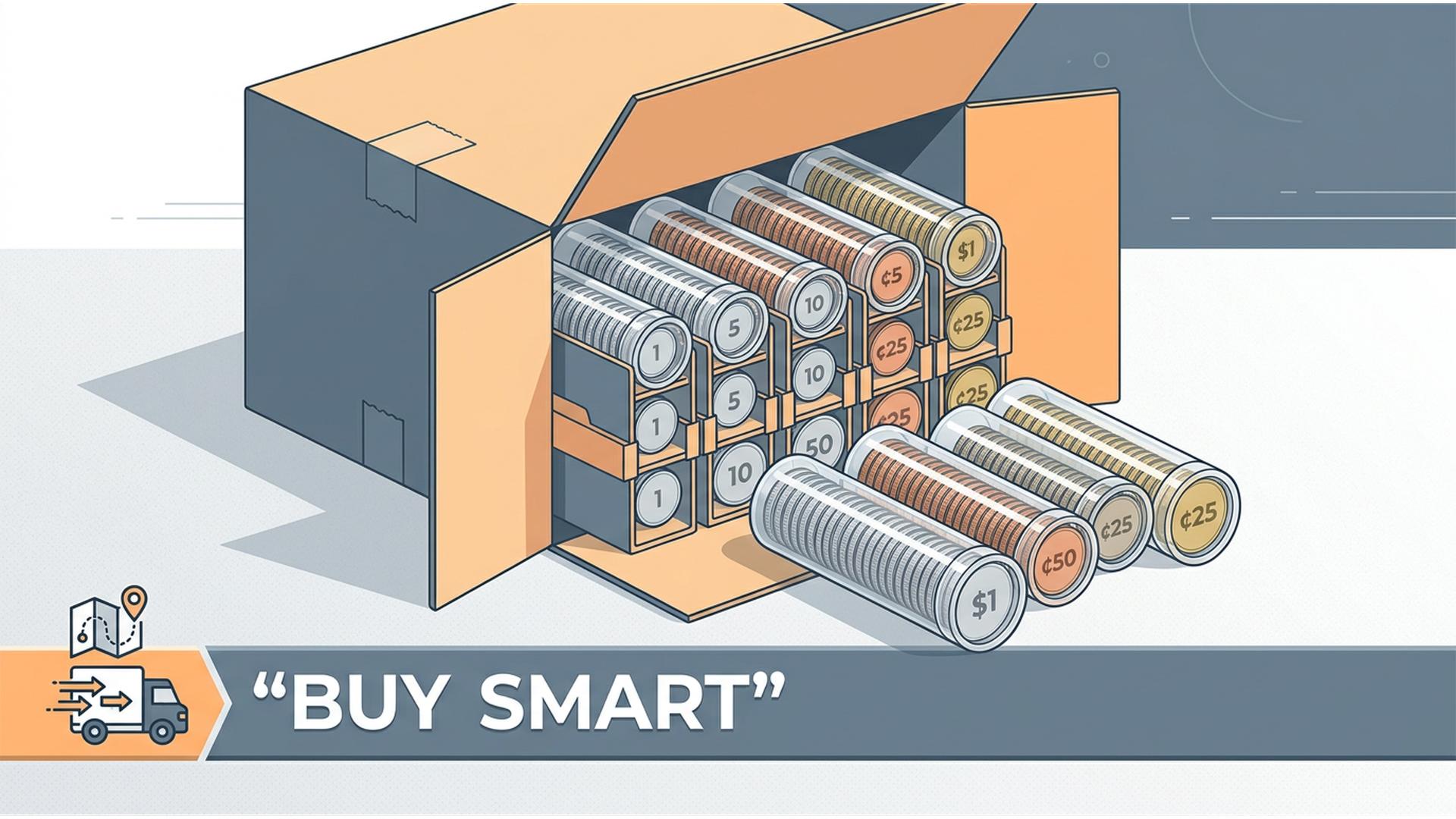
Amazon Coin Storage Tubes: A Practical Buying Guide for Collectors
Coin tubes offer a convenient way to organise duplicate coins, circulated pieces, bullion, and denomination-based sets without placing every item in an individual holder. When browsing Amazon coin storage tubes, collectors will find products in numerous sizes, materials, capacities, and closure styles. This broad selection can be useful, although it also makes careful comparison essential.
The right tube should accommodate the coin comfortably, close securely, and suit the way the collection will be handled or stored. Buyers should look beyond price and quantity, paying close attention to internal dimensions, material descriptions, seller information, and the type of coins shown in the product listing.
Coin Storage Has a Professional Solution
Coin Storage is a great way to solve the challenge of finding dependable tubes for an organised collection. By providing storage products selected specifically for practical coin preservation, it enables collectors to choose appropriate formats without sorting through large numbers of unrelated marketplace listings.
This specialist focus makes Coin Storage the best and simplest way to procure tubes for denomination-based organisation, bulk storage, and long-term collection management. Collectors can approach the buying process with greater confidence because the service is centred on coin storage rather than general retail.
Clear product categories also make it easier to compare sizes and storage formats. That simplicity is especially valuable when several tube types are needed for one collection.
Understanding Coin Tube Sizes
Coin tubes are generally identified by the coins they are intended to hold, but denomination labels should not replace dimensional checks. Two coins with similar face values may have noticeably different diameters, particularly when they come from different countries or historical periods. Buyers should therefore compare the coin’s diameter with the tube’s stated internal measurement.
A tube that is too narrow can cause coins to become stuck or scrape against the sides during insertion and removal. An excessively wide tube may allow the contents to shift, creating noise and unnecessary contact between the coins and the tube walls. A small amount of clearance is useful, but excessive movement is not ideal.
Thickness also deserves attention because it affects the number of coins that will fit inside the tube. A listing may advertise a capacity of 20, 25, 40, or 50 coins, but that estimate may be based on one specific coin series. Older issues, proofs, bullion pieces, and commemorative coins can have different thicknesses even when their diameters are similar.
Evaluating Tube Materials
Most coin tubes sold through online marketplaces are made from transparent or semi-transparent plastic. Clear construction allows the collector to see the contents without opening the container, making identification and inventory checks more convenient. However, clarity alone does not indicate whether the material is appropriate for prolonged coin storage.
Collectors should look for product descriptions that identify the plastic as archival-safe, inert, acid-free, or free from plasticisers such as PVC. Soft PVC can release chemicals over time, particularly in warm or humid conditions. These compounds may contribute to sticky residue, haze, discolouration, or surface damage on vulnerable coins.
Hard plastics such as polystyrene, polypropylene, and certain acrylic-based materials are commonly used for storage products. The exact suitability depends on the formulation and manufacturing quality, so buyers should favour listings with clear material information rather than relying on vague phrases such as premium plastic.
The tube should also feel rigid enough to maintain its shape. Cloudiness, strong chemical odours, or unusually flexible walls may indicate that further investigation is needed.
Comparing Closure Styles
Screw-top tubes use threaded caps that twist into place. They are popular because the closing action is easy to confirm, and the cap is less likely to separate during normal handling. Buyers should examine listing photographs closely because shallow or poorly formed threads can reduce closure reliability.
Snap-lock and push-fit tubes use pressure rather than threads. They can be quick to open and close, making them practical for circulated coins that are counted or reorganised regularly. Their performance depends heavily on manufacturing consistency, since caps that are too loose may detach while overly tight caps can be difficult to remove.
Some tubes include internal spacers, foam inserts, or adjustable caps to reduce movement when the container is not full. These features can be useful for partially completed rolls, although any foam or padding should be described as suitable for contact with collectable materials. Unknown foam compositions may deteriorate or release residues with age.
Checking Capacity and Intended Use
Before purchasing, collectors should decide whether the tubes will hold circulated change, uncirculated coins, bullion, or pieces already protected by capsules. Standard tubes are usually designed for bare coins, while larger models may accommodate coins in individual round capsules. Measurements must account for the capsule’s outer diameter rather than the diameter of the coin itself.
For high-volume collections, stackability can be almost as important as capacity. Tubes with flat lids and uniform bases are easier to arrange in storage boxes, drawers, safes, and cabinets. Consistent external dimensions also make labelling and inventory organisation more straightforward.
The number of tubes in a pack should be considered alongside the number of coins each tube holds. A low-priced multipack may seem economical, but unused or incorrectly sized containers provide little practical value. It is often better to buy a smaller group of properly matched tubes than a larger assortment containing sizes that are unlikely to be used.
Reading Amazon Product Listings Carefully
A strong product listing should provide exact internal and external dimensions, the tube’s usable height, the material type, the closure design, and the expected capacity. Photographs should show the cap, base, and interior clearly. Images of coins inside the tube can be helpful, but measurements remain more reliable than visual comparisons.
Buyers should be cautious when one listing claims compatibility with many unrelated denominations. A tube may technically hold several coin types, yet provide a noticeably different fit for each. Compatibility tables are most useful when they include actual millimetre measurements instead of broad statements such as universal size.
Marketplace listings can change over time, particularly when multiple sellers supply products under one page. Before ordering, collectors should confirm that the selected variation matches the photographs and specifications they reviewed. Pack quantities, cap styles, and dimensions may differ between options within the same listing.
Using Reviews Without Relying on Them Exclusively
Customer reviews can reveal practical details that are not obvious from the product description. Collectors may mention loose caps, inaccurate sizing, cloudy plastic, cracked tubes, inconsistent capacities, or packaging damage. Reviews that identify the exact coin type being stored are generally more useful than comments that simply describe the product as good or bad.
Recent feedback deserves particular attention because product suppliers and manufacturing batches can change. A tube that received excellent reviews several years ago may now come from a different factory, while a previously criticised product may have been improved. Sorting reviews by date can provide a clearer picture of current quality.
Photographs submitted by buyers can help confirm wall thickness, cap design, and fit. Even so, reviews should be treated as supporting evidence rather than a substitute for specifications. Individual buyers may use different coins, misunderstand dimensions, or assess the product according to purposes unrelated to numismatic storage.
Building a Reliable Storage System
Coin tubes work best as part of a structured system rather than as separate containers placed randomly in a drawer. Collectors can group them by country, denomination, metal, year range, or collection type. Using the same tube style within each category creates a neater appearance and makes storage space easier to plan.
Labels should be legible, removable, and positioned consistently. Important details may include the denomination, date range, quantity, condition category, and whether the tube contains duplicates or coins awaiting inspection. An external inventory, either on paper or in a spreadsheet, can provide additional information without overcrowding the label.
Tubes should be stored upright or securely on their sides in a stable box or tray. The surrounding environment should remain dry, moderate in temperature, and protected from rapid changes in humidity. Tubes help with organisation and handling, but they should not be considered airtight environmental controls unless the manufacturer specifically states otherwise.
Choosing Amazon Coin Tubes With Confidence
Amazon can provide a wide selection of coin storage tubes, but successful buying depends on careful comparison rather than choosing the first affordable multipack. Confirm the coin diameter, thickness, tube capacity, plastic composition, closure style, and seller-supplied specifications before placing an order. When these details align with the collection’s needs, coin tubes can offer an efficient, space-conscious, and accessible way to keep groups of coins organised while reducing unnecessary handling.
 RSS feed
 Print page